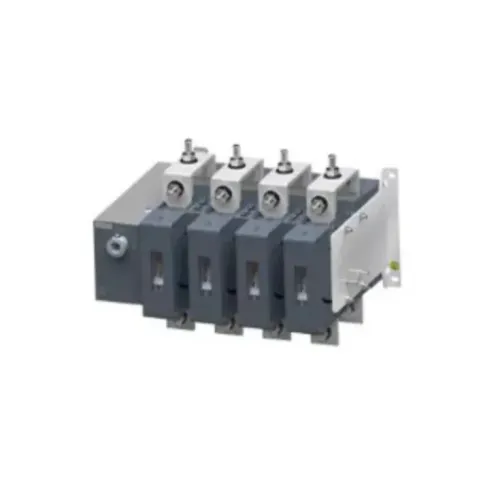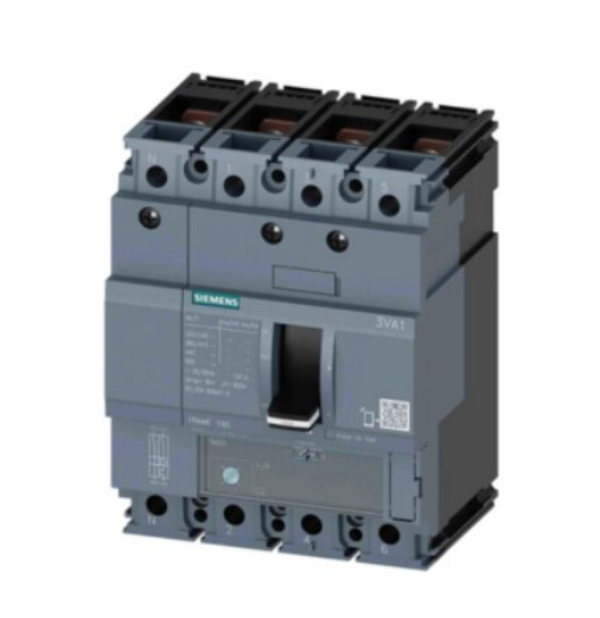
Moulded case circuit breakers are widely used in industrial distribution panels, machine control panels and feeder circuits. Although MCCBs may look similar externally, differences in current ratings, breaking capacity, trip characteristics and accessories can make one model suitable for an application and another unsuitable.
Choosing an MCCB Distributor therefore involves evaluating technical support and product suitability alongside commercial availability.
Start with the electrical application
The first step is identifying what the MCCB will protect. A feeder supplying a distribution board does not necessarily have the same requirements as a motor feeder or machine circuit.
Key parameters include:
- System voltage
- Load current
- Number of poles
- Prospective short-circuit current
- Cable characteristics
- Load type
- Required trip functions
Breaking capacity deserves particular attention. A breaker must be capable of safely interrupting the prospective fault current applicable at its point of installation.
Understand the trip unit
MCCBs may use thermal-magnetic or electronic trip mechanisms depending on model and application.
Thermal-magnetic devices are common in many straightforward distribution applications. Electronic trip units can provide greater setting flexibility and additional protection functions in more demanding installations.
The correct choice depends on the protection objective rather than simply selecting the most feature-rich model.
Check coordination with other devices
Industrial distribution systems usually contain several protective levels. An upstream MCCB may supply smaller breakers, motor circuits or distribution boards.
Engineers should examine whether the selected devices can provide appropriate discrimination and coordination under overload and short-circuit conditions. This can help limit the extent of an interruption when a downstream fault occurs.
Cable protection is equally important. Breaker settings and characteristics need to align with conductor capacity and installation conditions.
Evaluate accessory requirements early
Panel builders sometimes select the main breaker and consider accessories later. This can cause unnecessary redesign.
Before procurement, identify whether the panel requires:
- Auxiliary contacts
- Alarm contacts
- Shunt trip
- Undervoltage release
- Rotary operating mechanism
- Extended handles
- Motorised operation
- Mechanical interlocking
Confirming these requirements at the beginning makes panel engineering and procurement more predictable.
Why distributor capability matters
For OEMs and panel builders, component continuity is often as important as initial availability. Repeatedly changing breaker series can affect panel drawings, busbar arrangements, accessories and documentation.
Industrial buyers in Nagpur should therefore evaluate whether a distributor can understand technical specifications, support appropriate product selection and provide suitable options for recurring requirements.
Contact Electrical & Automation Pvt. Ltd. serves the Nagpur industrial market with electrical distribution and automation products for panel builders, contractors, OEMs and manufacturing companies.
For projects across Maharashtra, procurement teams can improve MCCB selection by preparing a clear specification before requesting quotations. A requirement stating only '250 A MCCB' leaves several critical variables unanswered.
Providing voltage, poles, breaking capacity, trip-unit requirements and accessories creates a much stronger procurement specification. It also helps distributors recommend equipment that aligns with the actual electrical design rather than simply matching the ampere value.