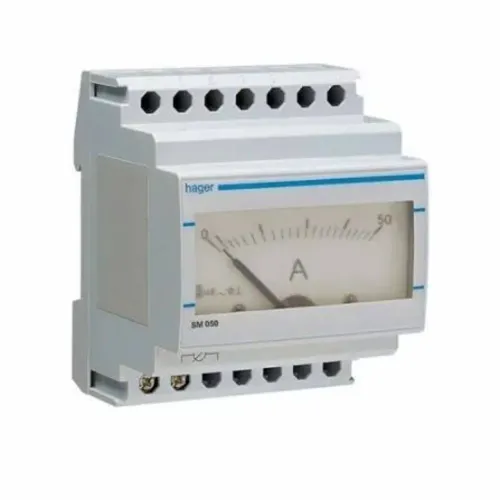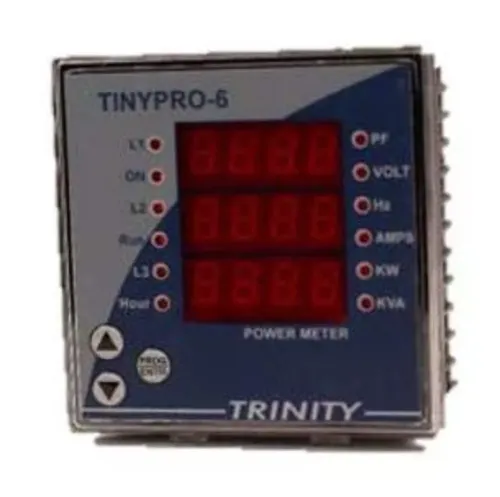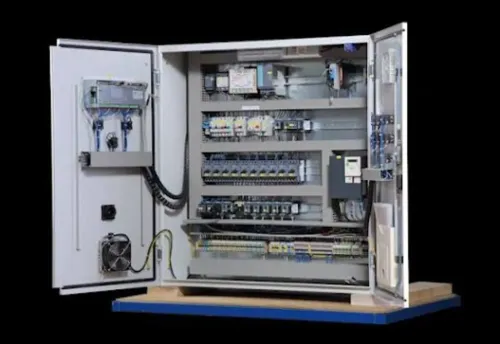
Industrial facilities with inductive loads such as motors, transformers, compressors, pumps and welding equipment often experience a drop in power factor. When the power factor remains below the desired level, the electrical system may draw more current than necessary for the same useful power. This can increase system losses, affect available capacity and, depending on the applicable tariff structure, contribute to additional electricity costs.
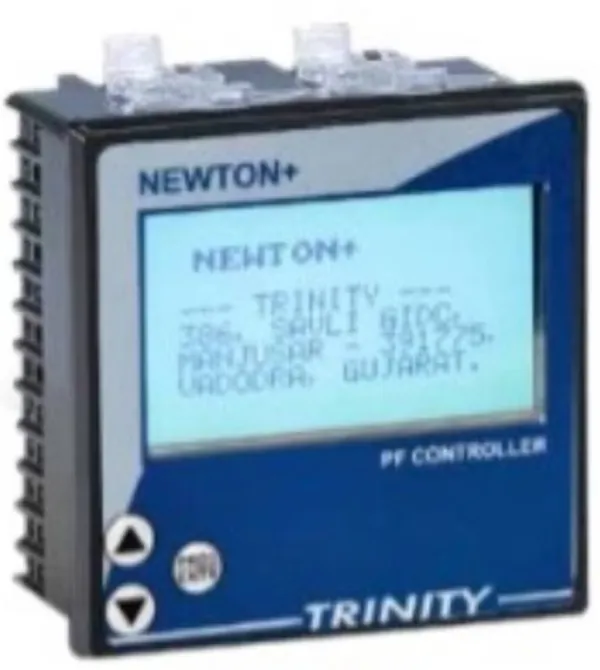
An APFC Relay Supplier supports industries by providing relays designed to automate capacitor bank switching according to changing reactive power requirements. Instead of keeping a fixed amount of capacitance connected continuously, an Automatic Power Factor Correction relay monitors electrical parameters and switches capacitor stages as required.
How an APFC relay works
The relay continuously evaluates the electrical system and determines when capacitor steps should be connected or disconnected. A properly configured APFC panel can therefore respond to variations in industrial load throughout the working day.
Important functions commonly considered when selecting an APFC relay include:
- Number of capacitor switching stages
- Measurement and display parameters
- Switching sequence
- Target power factor settings
- Alarm and protection functions
- Communication capabilities
- Compatibility with the APFC panel design
The number of stages matters particularly in facilities where loads change frequently. A panel with appropriate step configuration can provide more controlled compensation than a poorly segmented capacitor bank.
Why relay selection needs attention
An APFC relay should not be selected only according to panel size. Engineers need to consider the operating environment and characteristics of the connected load.
For example, a manufacturing unit containing large motors, variable frequency drives and other nonlinear equipment may require a different power factor correction approach from a facility dominated by relatively stable linear loads. Harmonics must also be considered because conventional capacitor installations can face additional stress in harmonic-rich networks.
Electrical contractors and panel builders in Nagpur frequently work with factories and commercial installations where operating conditions differ significantly from one project to another. Maharashtra's diverse industrial base makes correct component selection important for dependable power distribution systems.
What should buyers evaluate
Before finalising an APFC relay, procurement teams can check:
- Existing and expected load profile
- Required number of capacitor stages
- Current transformer arrangement
- System voltage and frequency
- Harmonic conditions
- Panel architecture
- Required monitoring features
- Maintenance accessibility
Correct relay programming is equally important. Even a suitable device may not provide the expected control when CT ratios, switching parameters, target values or capacitor step configurations are entered incorrectly.
For industrial buyers in Nagpur, technical compatibility should therefore take priority over choosing a relay solely on initial purchase price. Contact Electrical & Automation Pvt. Ltd. serves industrial electrical requirements where APFC relays and related power distribution components need to be matched with practical panel and application requirements.
A well-selected APFC relay becomes an important control element rather than simply another panel component. When the relay, capacitor stages, switching devices and protection arrangement work together correctly, the APFC system can respond more effectively to changing reactive power demand and support disciplined electrical energy management.
Keywords